
We had a training session last Saturday with Sustrans. I updated the facebook page and will just pull that update onto here because it forms the main thrust of our winter work schedule.
“Sow new seeds on the banks where nettles are, after clearing the nettles and dead vegetation underneath.
Don’t leave grass cuttings on the path – collect as we mow or rake afterwards.
Every wildflower is important. Be aware of what is already there.
Aim to clear as much scrub as possible (in the winter) to allow grass and wildflowers to grow (Sustrans want 100% more scrub cleared and open ground according to David from Sustrans).
We can work down to the A45.
Don’t mow until everything has flowered – difficult because we want to maintain a path as well as a wildflower haven. This is why we are getting the width so wildflowers can grow between the mown path and the shrubbery on the edges.
Rake the thatch off the grass but we don’t really need to do much else to get new seeds to set.
Work out what needs doing in the winter, whilst everything is in bloom in the summer.
We have a lot of Bloody Nosed Beatles so make something of this asset.
Get some signs made explaining what we are doing and who we are, as a group”.
So today’s workday was done with the above in mind.
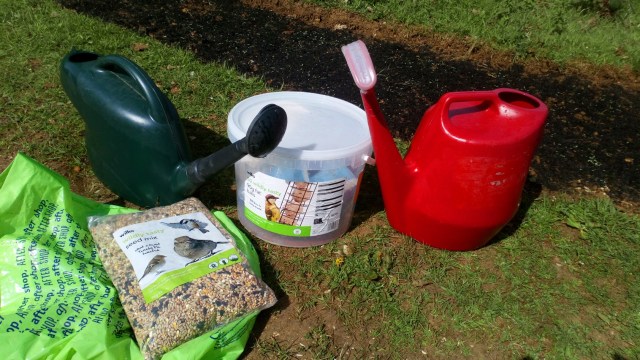
First we watered our wildflower bed. This is supposed to be a hub that will flower and then seed the local area. With the scrub clearance that is planned for the winter, this will not be enough.
We then just found bare earth patches and sowed a little bit of seed and raked it over.


This will be the last bit of sowing seed for this side of summer. The rest of our time will be just cutting back anything that is growing across the path, monitoring and recording flora and fauna, and litter.
With the scrub clearance plan for the winter, we obviously need something to grow in place of the removed scrub. If we leave it we will probably just get nettles. What I want is a wildflower meadow, so I have set up a plan to seed the areas that we clear, with a limestone liking wildflower and grass mix.
I have set up a crowdfund to get the funds together to pay for the seeds.
https://www.justgiving.com/crowdfunding/paul-hayden-hart
Thanks all who have already contributed.
This is the area that we want to change from scrub to wildflower meadow.


This is probably our most ambitious winter works schedule so far, We did have this area totally cleared a few years ago so the scrub is all pretty new. But to get a load of wildflowers and decent grasses growing will be fantastic for wildlife and biodiversity, and for the mental health of us humans. We all need a beautiful place to sit at, and a picnic table is a bit of a bonus and will help us reconnect with nature, make some like-minded friends and just be at one with oneself.
Paul


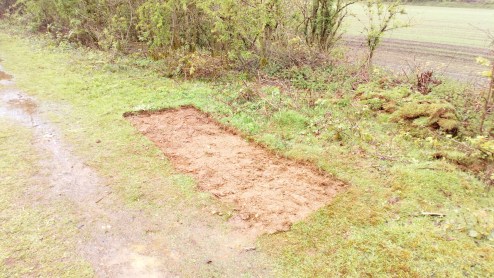
 We found a pretty sheltered area and started to scrape the top off the ground. Eventually we had a three meter by one meter area of bare earth.
 We mixed all of our seeds together and then mixed them with a peat-free compost for easy distribution.
 We will just need to repeat the above a few times and then see what grows in the summer. As the wildflowers flower and then go to seed, we will need to scrape back more of the grass so the seeds can get into the soil and spread next year. We can introduce yellow rattle in the autumn. This is a lovely wildflower that is great for bees and is also semi-parasitic to grass so should keep it in check and help us get a good balance of grass and flowers.
 I added some field poppies, really just to commemorate the 1918 one hundred year anniversary. The seeds in the other packs are, bird’s foot trefoil, common knapweed, corncockle, crested dog’s-tail, hedge bedstraw, lady’s bedstraw, oxeye daisy, quaking grass, selfheal, yarrow, betony, corn chamomile, corn marigold, cowslip, foxglove, red campion, white clover, wild carrot, musk mallow, salad barnet, wild basil, wild marjoram, bladder campion, great mullein, campion, garlic mustard, nettle-leaved bellflower, St John’s wort, ragged robin and upright hedge-parsley.
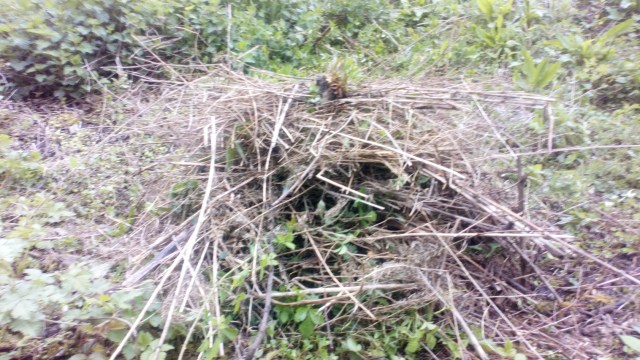


 It’s looking good.
 An interesting fungus that I will try and ID later on..


 Loads of bumble-bees and Brimstone butterflies seen today. Great to see the greenway coming back to life.
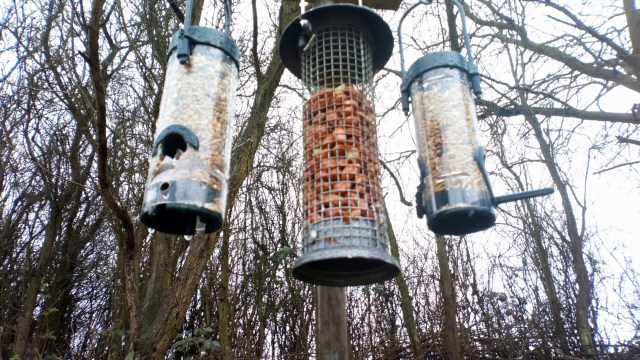
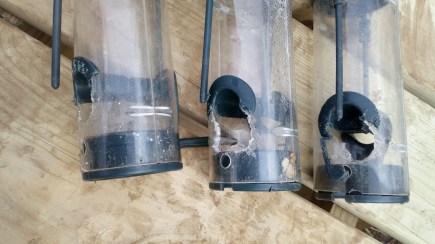
 So thinking that our feeders were safe from the squirrels, after they easily managed to scramble up our smooth steel poles, I wandered off southwards to pick up any litter.
 It looks like I am going to have to shell out even more money to secure our feeders!! Hopefully it will be third time lucky. Thankfully I have kept all the previously chewed up feeders so was able to make good feeders with all the bits.
 Jelly Ear used to be called Jew’s Ear. People think that the name was changed because it was disrespectful to Jewish people, but actually the name is derived from the belief that Judas Iscariot hanged himself from an elder tree, from which the fungus normally grows, and Judas’s Ear got shortened to Jew’s Ear. It is edible but not a great texture or taste. So there you go, a little bit of trivia for you, which is quite relevant at Easter time.


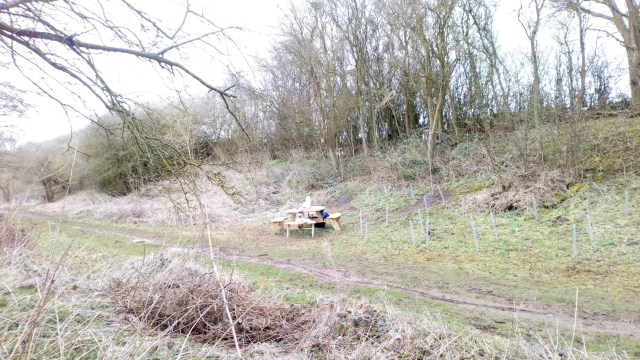






 Cawston Greenway